
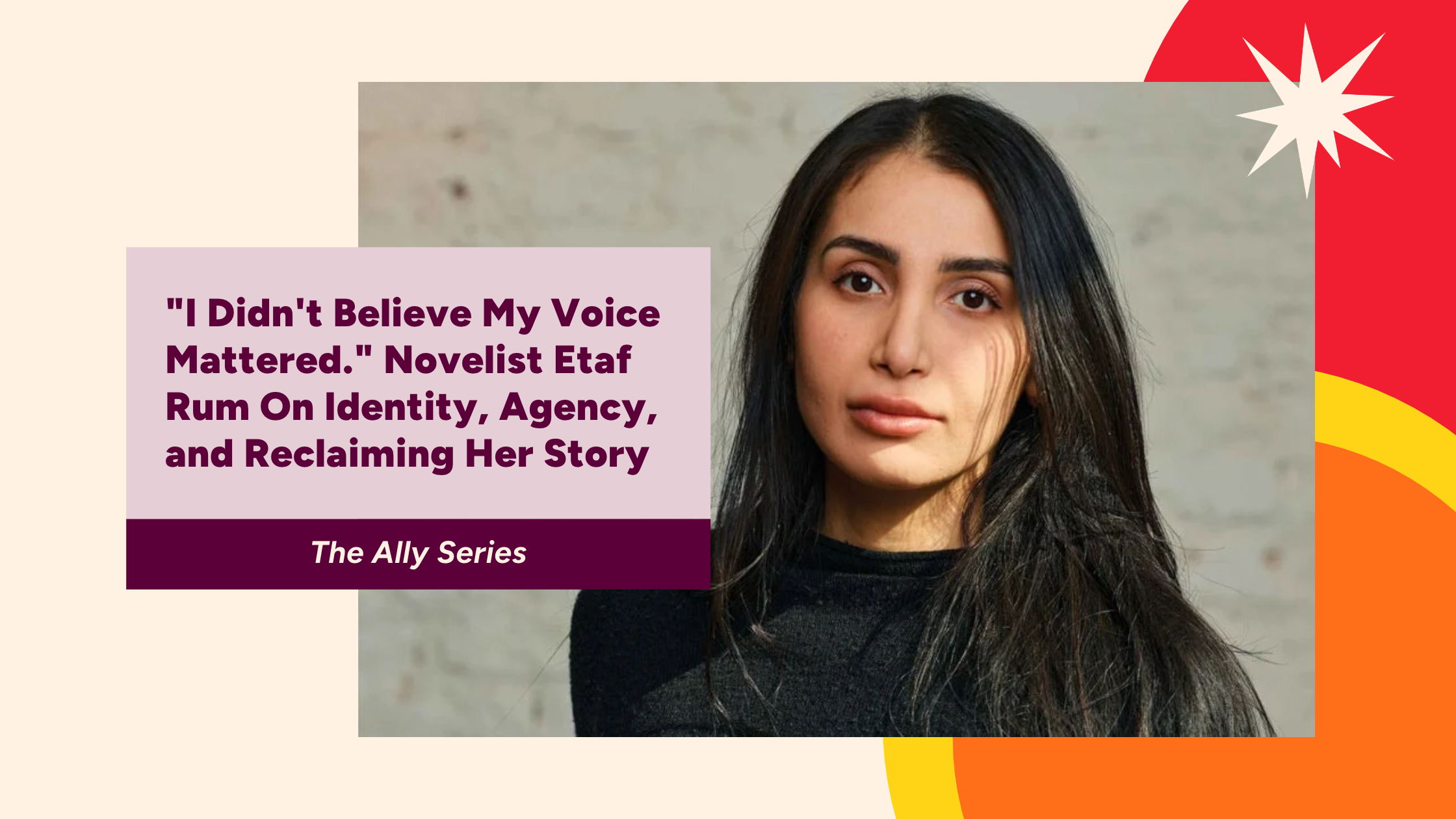


New York Times best-selling novelist Etaf Rum did what she was supposed to do.
Growing up in a conservative Palestinian-American family, she knew from a young age exactly what was expected of her: She would marry, have children, and devote her life to caretaking duties.
At age 19, in accordance with her family’s wishes, she entered an arranged marriage.
But her story does not end there.
Despite the cultural and familial pressure to follow a predetermined path, she insisted on continuing her education while raising her two young children — and ultimately discovered that she had the power to overcome limitations, challenge deep-rooted expectations, and redefine what was possible for her future.
She has since published two novels — A Woman Is No Man and Evil Eye — both exploring the personal journeys of Palestinian-American women navigating generational trauma and patriarchal constraints to discover their agency and determine their own futures.
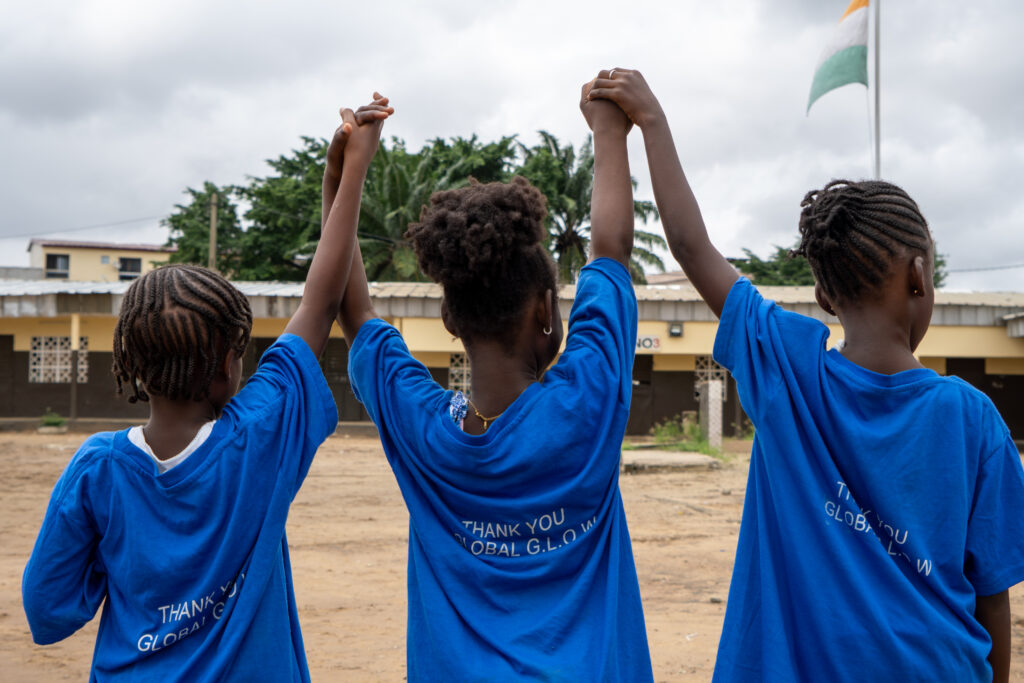
Etaf Rum’s commitment to using storytelling to uplift girls and women makes her an ally that we at Global Catalyst are proud to celebrate. Her personal journey reflects the stories we hear every day from so many of the girls in our global programs, and her message of perseverance and self-determination is one we’re honored to share with girls around the world.
In the latest edition of our new Q&A, The Ally Series, we caught up with Etaf to hear her reflections on the power of finding your voice, where she’s taking her advocacy work next, and the advice she has for girls who want to speak up, but aren’t quite sure where to begin.
Here’s what she had to say:
What does being an ally mean to you, and how do you make an intentional effort to show up for girls and women?
To me, being an ally means recognizing that not every woman has been given the same freedom to speak, to choose, or even to imagine a different life for herself. It means paying attention to the circumstances that shape women’s lives and doing what we can to create opportunities for one another.
As a Palestinian-American woman, I grew up understanding how deeply culture, family, and societal expectations can shape a girl’s sense of what is possible for her. I also know how difficult it can be to question those expectations, especially when doing so comes at a personal cost.
Through my writing, I’ve tried to bring attention to the lives of women whose experiences are often misunderstood or overlooked. But I think allyship also happens in much quieter ways. It’s in the conversations we have with our daughters, the way we listen to other women, and our willingness to support their choices even when those choices look different from our own.
When did you realize your voice could create change, and how have you used it to speak up for something you believe in?
For much of my early life, I didn’t believe my voice mattered.
For much of my early life, I didn’t believe my voice mattered.
I grew up in a world where I understood what was expected of me long before I understood what I wanted for myself. Books were the first place I encountered women who questioned their circumstances, and eventually writing became a way for me to do the same.
I don’t think I fully understood the power of my voice until my first novel, A Woman Is No Man, was published. I began hearing from women around the world who recognized themselves in the story. Some had never spoken openly about their experiences before. Others told me that reading the novel helped them understand their mothers or their own lives differently.
That experience changed my understanding of what storytelling could accomplish. I had written something deeply personal, rooted in experiences I knew intimately, and somehow it had created space for conversations that many people had spent their lives avoiding.
Since then, I’ve tried to use my platform to advocate for Palestinian voices, particularly the voices of women, and to challenge the narratives that reduce our communities to stereotypes.
I believe literature can create change because it allows us to recognize the humanity in experiences different from our own.
Can you share a meaningful moment in your advocacy journey that reinforced why this work matters to you? What did you learn from that experience?
One of the most meaningful parts of my journey has been meeting women at book events and hearing how my stories have affected them.
I remember realizing that readers weren’t simply responding to the characters I’d created. They were bringing their own lives into the conversation. Women would share stories about their mothers, their marriages, their childhoods, and the expectations they’d carried for years. Sometimes, they were speaking about these things openly for the first time.
What stayed with me was how much people needed to feel understood. So many women grow up believing that their private struggles are theirs alone, particularly when those struggles involve family, culture, or traditions they feel obligated to protect.
Those conversations taught me that advocacy doesn’t always begin with having answers. Sometimes it begins with making room for people to tell the truth about their lives without being judged or silenced.
That realization continues to shape the way I approach my work.
What is something girls or young women have taught you that has influenced the way you live, lead, or advocate?
My daughter has taught me a great deal about this. Watching her grow into a young woman has made me reflect on how differently our generations understand independence, ambition, and the right to make our own choices.
I grew up believing that being a good daughter meant putting other people’s needs and expectations ahead of my own. There were so many things I accepted without questioning because I didn’t know I was allowed to question them.
My daughter has a much stronger sense of her own individuality than I did at her age. She’s willing to express herself, pursue her interests, and imagine a future that belongs to her.
“I grew up believing that being a good daughter meant putting other people’s needs and expectations ahead of my own.”
Watching that has reminded me how important it is for young women to grow up knowing that their lives are theirs to shape. It’s also taught me that supporting the next generation means being willing to learn from them.
We often assume that our role is to teach young women how to navigate the world, but sometimes they’re the ones showing us what becomes possible when we stop accepting limitations we’ve inherited.
Thinking back to your younger self, what is one piece of advice you would give a girl who has an idea for change, but isn’t yet confident enough to act on it?
I would tell her that she doesn’t have to feel confident before she begins.
For a long time, I believed I needed permission to pursue the life I wanted. I thought I needed to be more prepared, more certain, or somehow become a different version of myself before I could take the first step.
Looking back, I realize that so much of my life changed because I eventually acted despite being afraid. I began writing before I knew whether anyone would read my work. I made decisions that frightened me because I could no longer ignore what I knew I wanted for myself.
I would tell her to take her ideas seriously, even when other people don’t. Especially then. And to remember that the people around her may not always understand the life she’s trying to create, particularly if it’s different from the one they’ve imagined for her.
She doesn’t need to know exactly where the path will lead, only to trust herself enough to begin.
What’s next for you, and what impact do you hope to make?
I’m in a period of my life where I’m thinking a great deal about what it means to use my voice with intention. Writing has given me opportunities I never imagined having, but it’s also made me more aware of the responsibility that comes with being heard.
I’m continuing to explore stories about identity, belonging, faith, and the ways we inherit certain ideas about who we’re supposed to be. These are questions that have shaped much of my life, and I think they’re especially relevant to women who are trying to understand themselves beyond the roles they’ve been given.
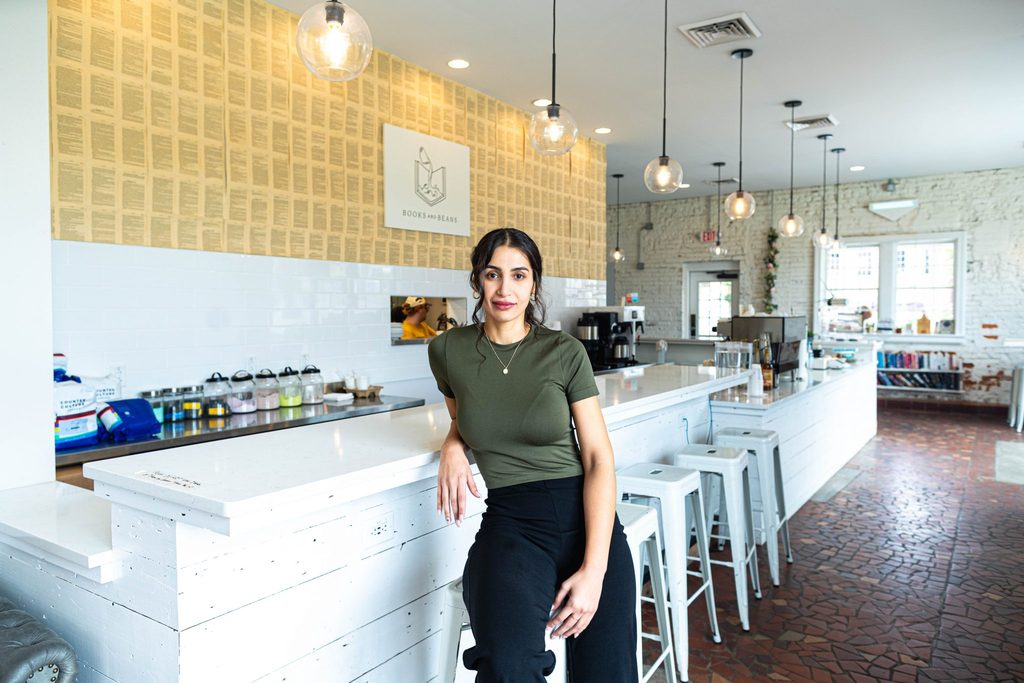
I’m also passionate about making Palestinian literature more accessible through Habibti Book Truck, a project rooted in my belief that books can connect people to histories, cultures, and experiences they might otherwise never encounter.
Ultimately, I hope my work encourages women and girls to question the limitations they’ve inherited and to recognize that they have a right to shape their own lives.
I know how long it took me to believe that about myself, and if something I’ve written or shared helps another woman arrive at that understanding a little sooner, that means a great deal to me.
Ready to meet more inspiring changemakers? Check out, “Reflections on Voice, Power, and Change from Musician and Activist Kiran Gandhi.”
Global Catalyst mentors girls around the world to become powerful advocates and confident leaders. Our signature program, GLOW Club, connects girls in some of the world’s most underserved areas with trusted local mentors and a safe space to express themselves as they develop their agency, find their voice, and build their power. Since our founding, we’ve ignited the power of more than 100,000 girls, sparking a growing movement of youth-led change that is transforming communities — and the world — for the better.