


By Katherine Ramos, Program Officer for Latin America
This year, Argentina marks the 20th anniversary of its landmark law guaranteeing every student in the country the right to comprehensive sex education. At the same time, funding for the its implementation hit a record low – just 2% of what was actually spent in 2023.
It was a strange way to mark the anniversary — and its effects could have devastating consequences for the country’s youth. Because when girls lack access to accurate, age-appropriate information about their bodies, relationships, and sexual health, they’re more vulnerable to misinformation, abuse, and other harms.
Recently, I had the chance to visit GLOW Clubs in Argentina, where I spoke directly with girls and mentors about the law, the political and cultural context surrounding its rollback, and what they’d like to see enacted to keep girls safe.
What I saw made me certain of one thing:
Girls are the most at-risk of being harmed by this law’s erosion. But they’re also best positioned to protect it. And they’re taking action — today.
What Was Promised, and What Changed
In 2006, Argentina passed Ley 26.150 — Programa Nacional de Educación Sexual Integral — guaranteeing every student in the country, at both public and private schools, the right to comprehensive sexual education. Locally, the law is known as “ESI.”
It was hailed as one of the most far-reaching sex ed laws in Latin America: Body autonomy, consent, menstruation, healthy relationships, and gender-based violence, all taught as one connected curriculum instead of a single, awkward unit crammed into a Biology class.
Then came the changes.
Argentina’s proposed 2025 national budget eliminated ESI’s dedicated funding lines.
Teacher training fell from 65,000 educators in 2023 to just 900 in 2024 — a drop that’s hard to read as anything but deliberate.
A draft 2026 curriculum reform would replace ESI in primary school with a new “health education” subject, and fold sexuality-related content in secondary education into Biology.
For what it’s worth, the law hasn’t been repealed. It still exists on paper.
What’s quietly gone missing is everything that used to make it usable in an actual classroom.
What I Heard and Saw at GLOW Clubs in Argentina
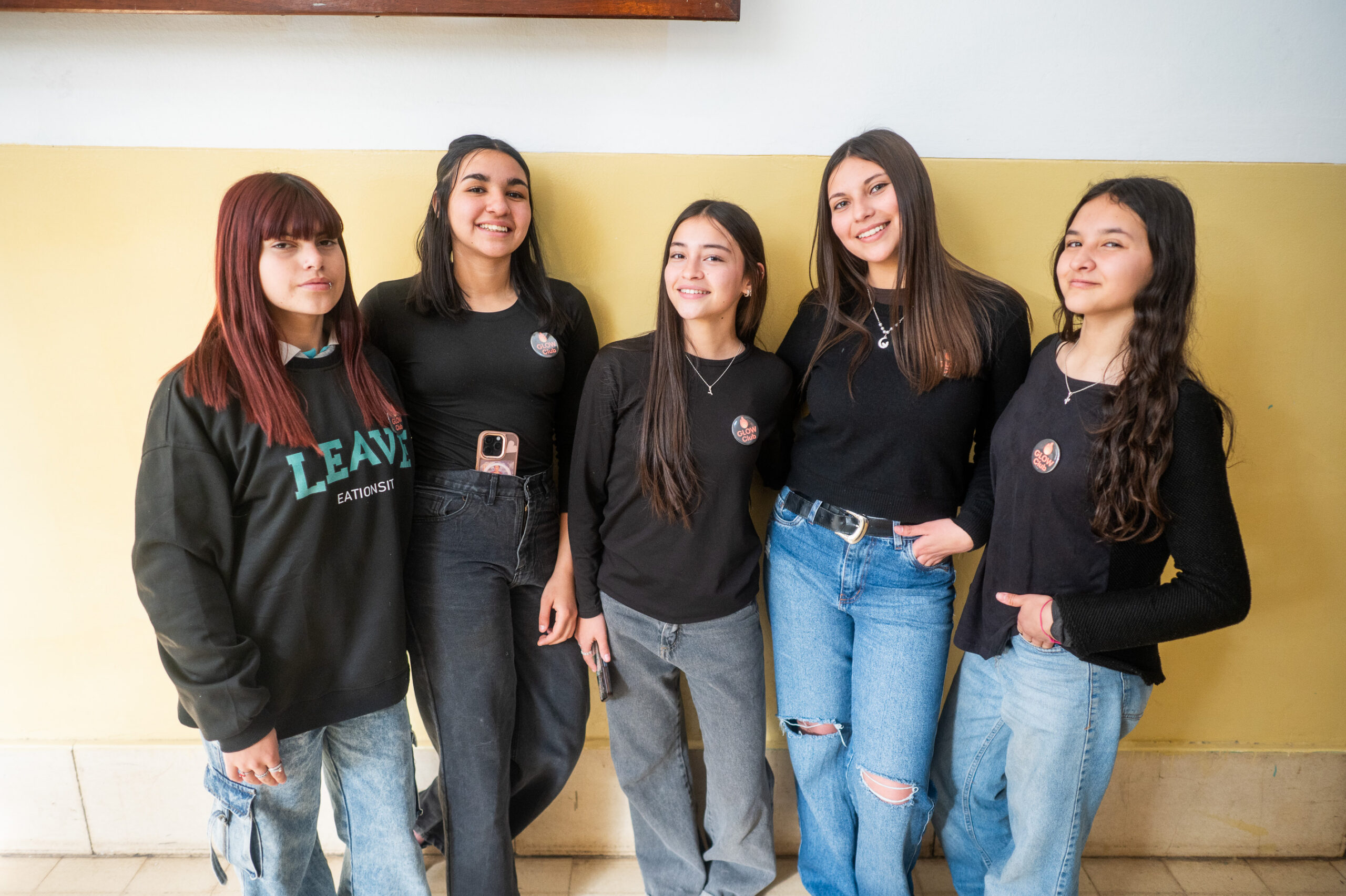
Recently, I visited GLOW Clubs in San Pedro, Argentina: a small, rural town in Córdoba province where girls have been asking for this kind of content for years — and not in the abstract.
In the safe space of their club, with the support of trusted local mentors, they’ve been discussing real questions about their bodies, consent, and what a healthy relationship is supposed to look like next to one that isn’t.
Our programming — based on the Collaborative for Academic, Social, and Emotional Learning (CASEL) framework — allows these conversations to continue, regardless of what may happen to national law and funding. But for other girls across the country, there is no guarantee.
I asked our GLOW Club mentors, Romina and Miriam, about this disconnect, and they put it plainly:
“Nos encontramos en un tiempo difícil: en el cual es necesario seguir defendiéndola,” they told me. In English, “We’re in a difficult moment: one where it’s necessary to keep defending [ESI].
They see it as part of a wider pattern of rising right-wing extremism across the region that is threatening women and girls’ rights
“El avance de ciertos movimientos de derecha a nivel latinoamericano pone en riesgo los derechos que la ESI vino a defender,” they explained. In English, “The advance of certain right-wing movements across Latin America puts at risk the very rights ESI came to defend.”
How Girls Are Taking Action To Defend ESI
This August, Córdoba’s provincial ESI program marked the 20th anniversary with a regional summit, and invited girls from GLOW Club to take part.
The girls spoke in front of more than 200 local teachers and practitioners about the importance of ESI from a youth perspective, and hosted an interactive booth with activities on self-esteem, gender stereotypes, relationships, and contraception.
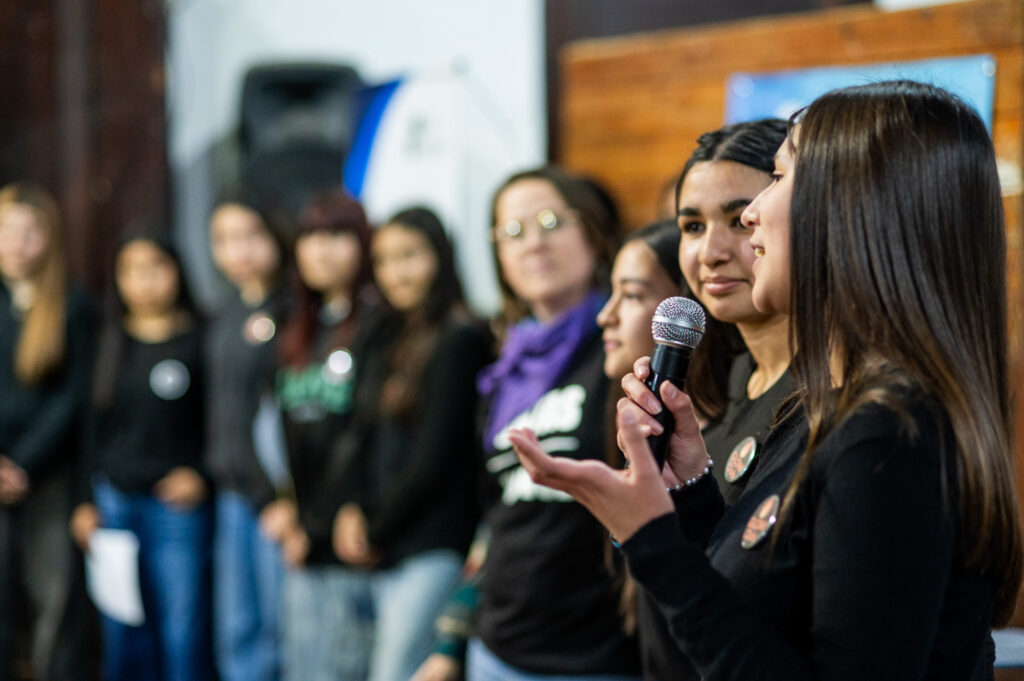
For girls, the opportunity to lead, educate, and share their own views and personal perspectives on a topic important to them was invaluable.
“Estos 200 adultos me estaban escuchando. Y eso nunca había sucedido antes,” they told me. In English, “These 200 adults were listening to me. And that’s never happened before.”
“A right is supposed to be something you can rely on — not something girls have to fight to access. And what this project showed me is that when systems fail, girls show up, speak up, and take action themselves.”
Victoria, one of the girls who presented that day, told me that she had been nervous walking into the room. But by the time she and her peers moved from the stage to their activity table, the nerves gave way to something else entirely: teachers leaning in, playing along, actually listening to what they had to say
“”La confianza que nos demostró los profes nos hizo sentir seguras. Se sintió mucho el cariño de los profes hacia todas nosotras,” she said. In English, “The confidence the teachers showed us made us feel secure. We really felt how much the teachers cared about all of us.”
Mentors Romina and Miriam shared that watching their group of girls hold a room like that made them full of enthusiasm and pride in what they had built over the course of the year.
The impact extended beyond that one room, too. Schools from across the region left their contact information wanting to bring a GLOW Club to their own students, and the provincial ESI program and school psychology team learned about the club’s work for the first time.
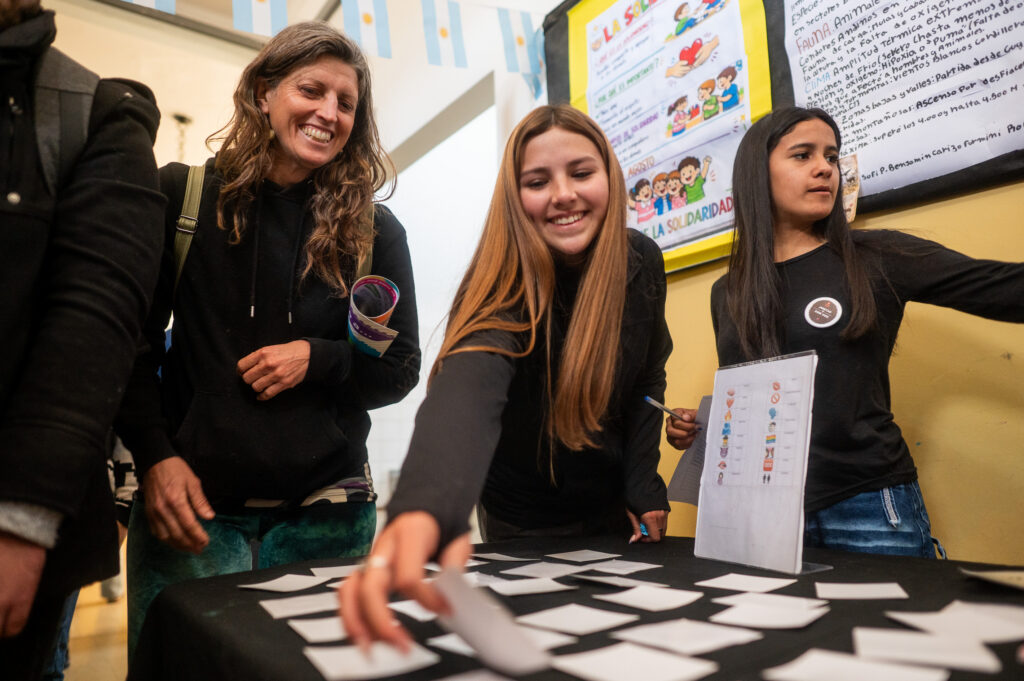
If even a handful of those follow through, thirteen girls in one auditorium could end up shaping how ESI actually reaches classrooms well beyond San Pedro.
A right is supposed to be something you can rely on — not something girls have to fight to access. And what this project showed me is that when systems fail, girls show up, speak up, and take action themselves.
These are the girls this law was written for — twenty years ago, before most of them were even born.
Whatever happens to ESI’s funding next year, they’ve already shown that they know exactly what they’re owed.
Want to Learn More About Girl-Led Advocacy? Check Out, In Côte d’Ivoire, This Girl’s Investment Is Helping Women Build Better Livelihoods.
Global Catalyst mentors girls around the world to become powerful advocates and confident leaders. Our signature program, GLOW Club, connects girls in some of the world’s most underserved areas with trusted local mentors and a safe space to express themselves as they develop their agency, find their voice, and build their power. Since our founding, we’ve ignited the power of more than 100,000 girls, sparking a growing movement of youth-led change that is transforming communities — and the world — for the better.