


By Faith Kamadi, Program Officer, East and Southern Africa
Girls can make their voices heard when they have access to a microphone.
In South Sudan, girls are taking the mic into their own hands by using community radio to combat child marriage in an area of the country where an estimated 52% of girls are forced into child marriage before the age of 18.
In this community, families in poverty often marry off young girls — sometimes as young as 13 or 15 years — in exchange for cattle or a bride price.
Some girls are married early because their brothers need the money to fund their own marriages. Other times, cultural practices involve giving young girls to rival families to settle disputes and end cycles of violence.
Although the practice is illegal in South Sudan, local leaders state that many cases happen quietly, in rural villages where they go unreported.
Girls in this region have few opportunities to talk candidly about problems that affect their lives — and face severe personal, social, and systemic dangers when they attempt to speak out against child marriage.
Because child, early, and forced marriage (CEFM) is deeply entrenched in local traditions and exacerbated by economic crises, challenging the practice means directly confronting powerful community systems.
Despite these barriers, girls in GLOW Clubs are not merely waiting for adults to represent them — They are raising their voices and taking their discussions about the harmful practice outside of normal club meetings and onto the airwaves as a powerful form of advocacy with the potential to create lasting change.
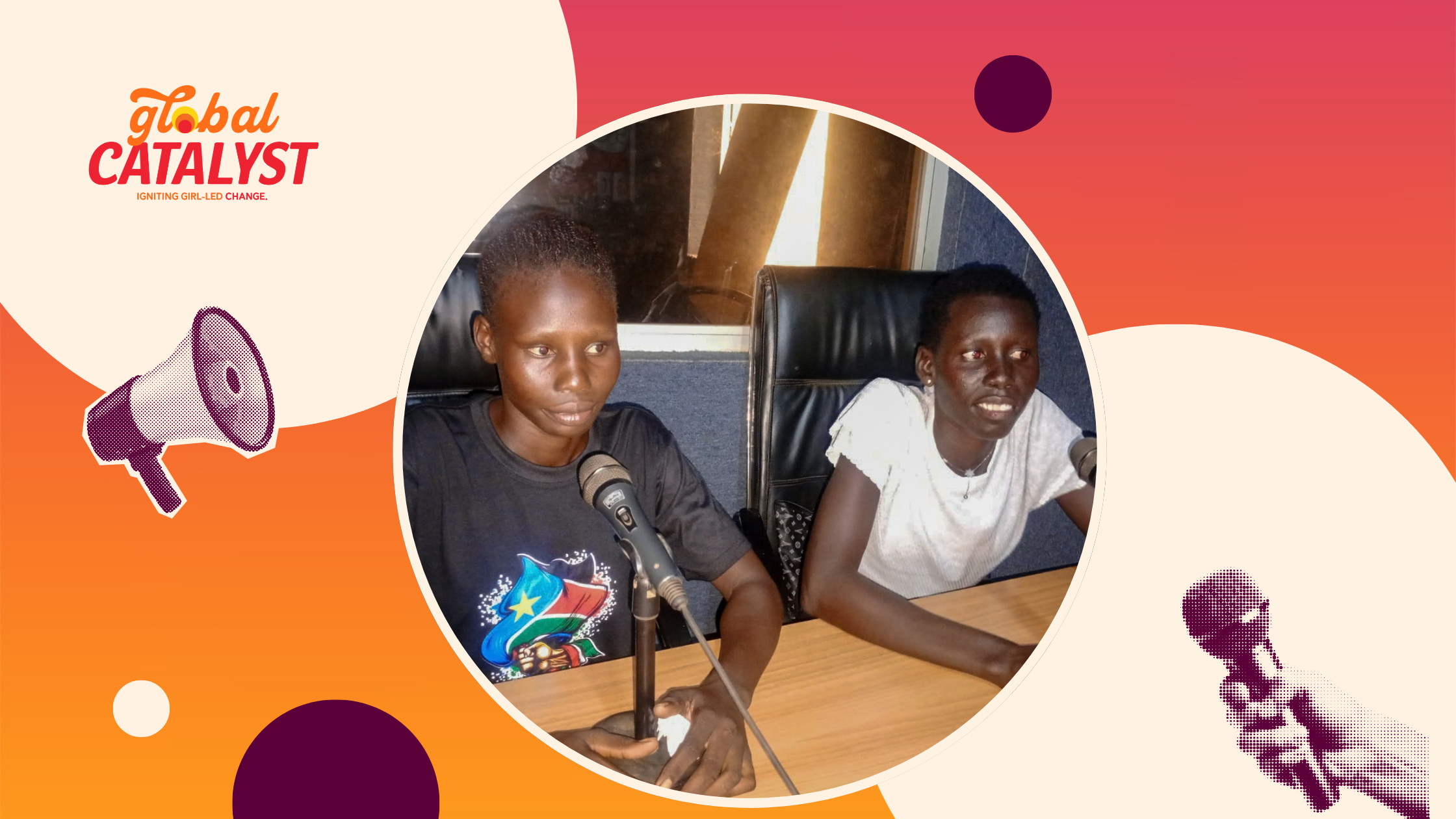
Our local GLOW Club implementing partner, Women Relief Aid (WRA), has partnered with local radio station Voice of Eastern Equatoria State FM (VOEES 97.5 FM Radio) to host a weekly radio talk show — offered in English, Lotuko and Juba Arabic — to raise awareness and engage the community on issues affecting girls.
“Because child, early, and forced marriage (CEFM) is deeply entrenched in local traditions and exacerbated by economic crises, challenging the practice means directly confronting powerful community systems.”
In GLOW Club sessions, girls map out problems that impact their lives. They debate the subject, exchange their viewpoints and experiences with one another, identify important messages, and determine the messages they want their community to hear.
They then take these discussions to the radio once per week, where their opinions and perspectives are heard by parents, youth, community members, and other stakeholders.
Every radio session gives them more than an opportunity to speak — It gives them confidence, public speaking practice, and practical leadership skills.
Four sessions of their radio show air each month — each show reaching an estimated 9, 850 people — allowing the girls’ advocacy messages to reach a wide-reaching audience within the community.
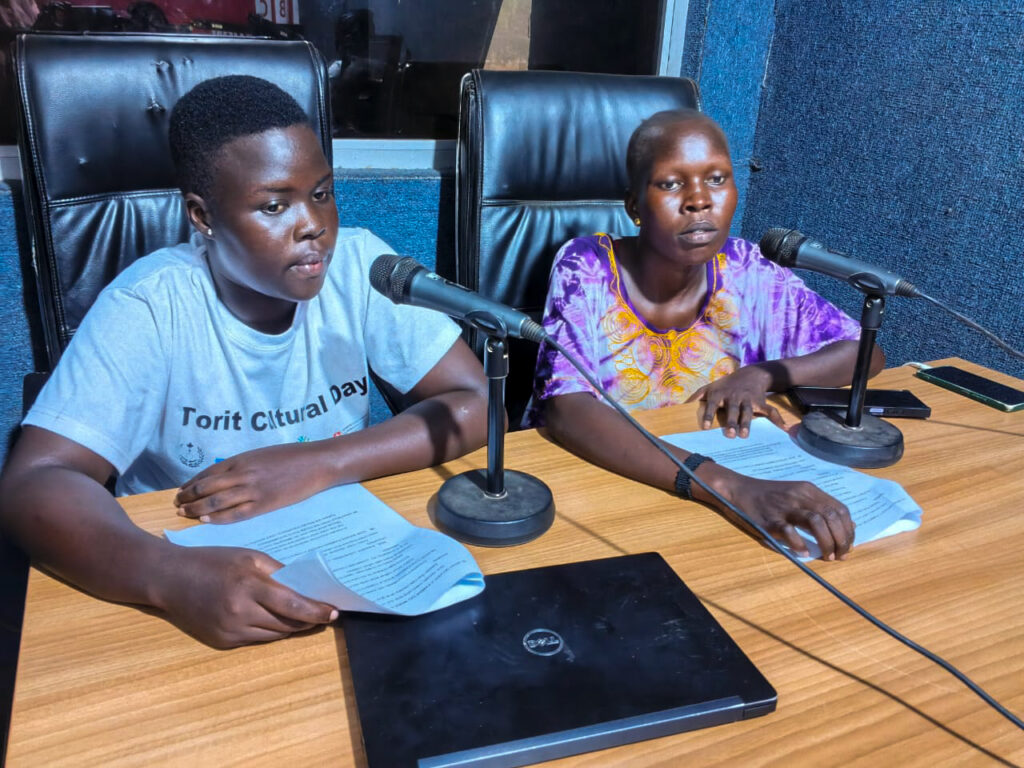
Four girls participate in each radio session, sharing their experiences and perspectives and engaging listeners on key issues affecting girls. They place a particular emphasis on child marriage, its causes and effects, and the value of letting girls make decisions about their own futures.
The girls highlight how child marriage can interrupt education and limit opportunities.
“I have seen how child marriage can interrupt a girl’s education,” said GLOW Club member Charity. “Instead of being in class, learning and preparing for her future, she may be forced to take on responsibilities that prevent her from continuing with school.”
One of the key messages emerging from their conversations is that a girl’s future should be bigger than marriage. Girls deserve the opportunity to remain in school, develop their talents, pursue careers, and make informed decisions about their futures.
“Girls need time to grow, learn, and build their future,” said another GLOW Club member. “When child marriage takes that opportunity away, it can leave them feeling like they have lost control of their lives and their dreams.”
During their shows, the girls promote open conversation and dialogue by posing questions rather than just telling their communities what to think. Questions like:
- Why should a girl’s marriage force her to drop out of school?
- When a girl is forced into an early marriage, what happens to her dreams?
- How can communities and parents safeguard girls and help them finish their education?
These discussions provide listeners with a chance to consider ideas and behaviors that shape girls’ lives and futures.
By speaking about these issues publicly, girls are challenging the idea that decisions about their lives should be made without their voices being heard. They are proving that girls are not just information consumers — they are leaders, advocates, and content producers.
Ending child marriage requires more than telling girls to say no. It requires communities to examine the social norms, economic pressures, and gender inequalities that allow the practice to continue.
Through their radio sessions, GLOW Club members are helping shift the conversation from “When should a girl get married?” to “What opportunities should a girl have before she becomes an adult?”
They are asking their communities to see girls not as burdens or future brides, but as students, leaders, entrepreneurs, professionals, innovators, and change-makers.
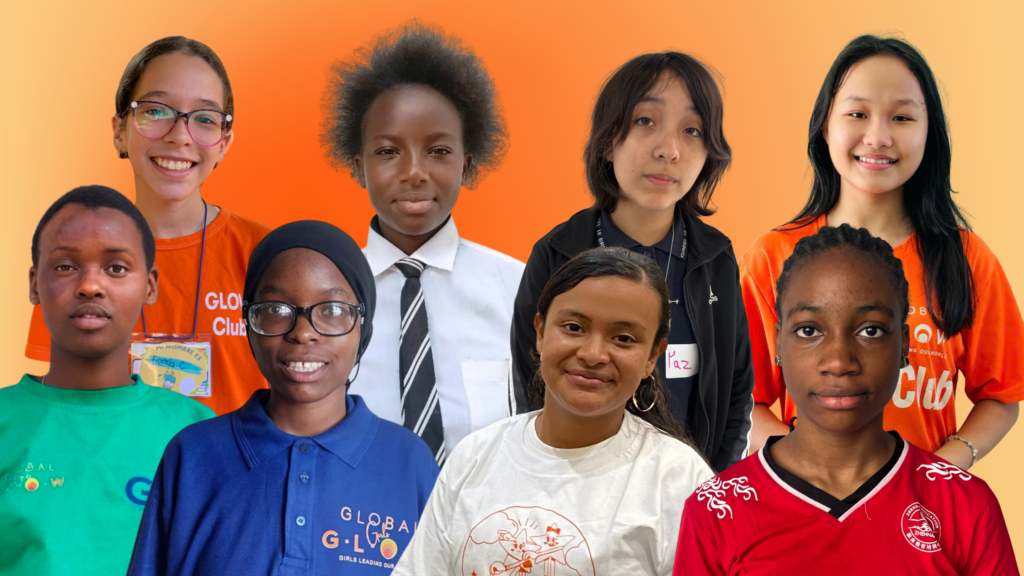
Want to learn more about girls leading change today?; Check out, 8 Girls From 8 Different Countries Working Together to Ignite Global Change.
Global Catalyst mentors girls around the world to become powerful advocates and confident leaders. Our signature program, GLOW Club, connects girls in some of the world’s most underserved areas with trusted local mentors and a safe space to express themselves as they develop their agency, find their voice, and build their power. Since our founding, we’ve ignited the power of more than 100,000 girls, sparking a growing movement of youth-led change that is transforming communities — and the world — for the better.