


By Riya Thakur, Senior Manager of Global Advocacy
In South Sudan — a country where nearly half of girls are married before age 18 — two young girls, Alima and Lamara, started conversations about early forced marriage. Through discussions with families and advocacy on local radio, people took notice. And ultimately, their actions secured public commitments from three local chiefs to discourage the practice.
For girls in these communities, those commitments matter because they come from people whose decisions can shape their futures.
This is where our advocacy work at Global Catalyst begins: with the realities girls encounter, and the changes they want to see.
A classmate leaves school. A girl needs help, but worries that speaking up will bring blame rather than support. Harassment makes the journey to a classroom feel unsafe. Harmful messages make digital spaces feel unsafe, too.
Girls understand how these experiences affect their lives, both online and offline, and they have ideas about what could make things different.
Our New “Glo-W-cal” Approach to Advocacy
At Global Catalyst, our new advocacy strategy equips girls with the skills, relationships, resources, and opportunities to use their lived experience and existing knowledge of community-wide issues to influence decisions and shape their futures.
Our “Glo-W-cal” approach connects advocacy rooted in girls’ local communities with national and global policy engagement:
Local experiences reveal where services, practices, and policies need to change. Wider engagement creates opportunities for girls to bring those findings to decision-makers, build alliances, and seek responses.
Our signature program, GLOW Club, provides an important foundation. Relationships with trusted local mentors and peers provide girls with a space to understand their rights, develop their confidence, and practice expressing themselves and their views.
Our advocacy programs build upon that foundation, supporting girls to use their agency, voice, and power into tools for collective action.
One of our key advocacy programs, The Girl Advocacy Committee (GAC) is central to this work. This 9-month virtual training program equips girls to identify the issue that matters most to them, organize with others to express their concerns, and engage the people and institutions responsible for responding.
The Dream. Plan. Do. Review. Approach
Across these programs, a shared framework guides girls’ journeys: Dream. Plan. Do. Review. It gives girls a practical way to move from recognizing an issue to pursuing change, while making space to learn and adapt along the way.
- In Dream, girls explore what matters to them and imagine what could be different. They listen to one another, consider the challenges in their communities, and identify a change they want to work towards. This stage keeps advocacy grounded in girls’ personal priorities.
- In Plan, girls turn that vision into a strategy. They explore why an issue persists, identify who has the authority to address it, and develop a specific request. They consider what evidence they need, whose support will help, and what progress would look like.
- In Do, girls put their plans into practice with support from mentors and local partners. This might involve consulting peers, meeting a principal, organizing a community dialogue, or presenting recommendations in a policy forum. Taking action builds experience in communicating, working with others, and responding to challenges.
- In Review, girls reflect on what happened. They examine the responses they received, what changed, and what still needs attention. That learning informs their next steps — whether that means following up on a commitment, adjusting their approach, or taking on a new priority. This phase of the cycle makes reflection a part of advocacy from the beginning.
Our Girl Advocacy Committee is a structured opportunity to put this framework into practice.
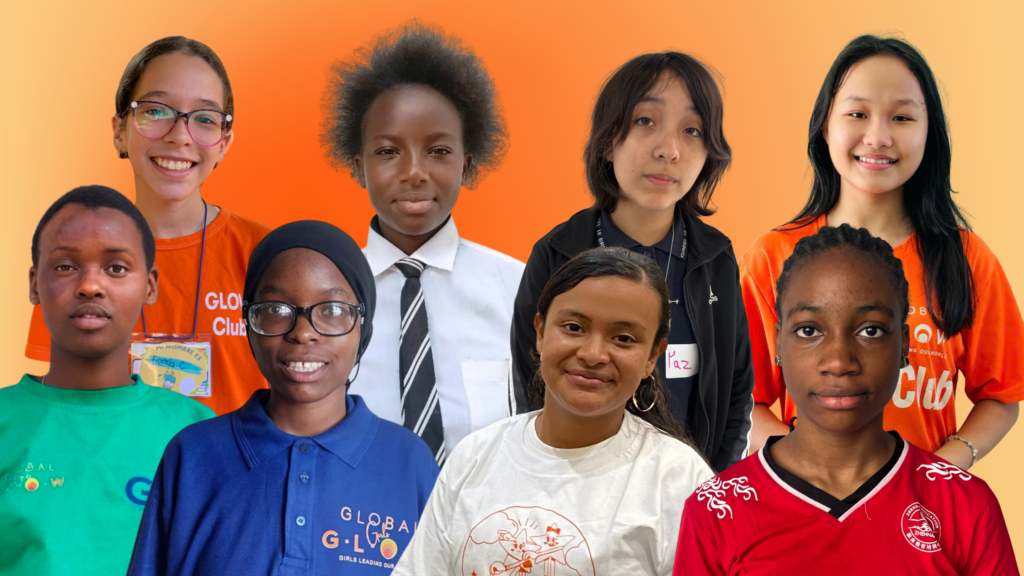
Our 2026–27 committee brings together eight girls from eight different countries for nine months of intensive advocacy training, and the opportunity to develop and implement their own community advocacy project with dedicated funding. It is also a powerful platform for shared connection: members learn from global peers whose lives may look different, but whose concerns and ambitions often intersect.
Girl-Led Projects. Girl-Led Change.
Last year, our 2025-2026 Girl Advocacy Committee showed how our advocacy strategy and approach translate into action.
18 girls across 13 countries implemented community projects that reached an estimated 3,500 people.
Here are a few powerful examples of the change they led:
- In Paraguay, Angeles secured school approval for peer-led workshops on bodily autonomy and consent, resulting in two sessions that reached 21 students. (In collaboration with our local implementing partner, Super Kids)
- In Nepal, Aahana recruited her friend Shreeja to help secure their principal’s support for peer-led workshops, ultimately training 25 students on digital safety.(In collaboration with our local implementing partner, Rukmini Foundation)
- In Cambodia, Yadane equipped and trained four of her friends to become peer leaders against online child sexual exploitation. (In collaboration with our local implementing partner, AusCam)
- In Ghana, Nadra established a 10-member committee to develop school guidelines addressing bullying, stigma, and inappropriate touching of girls. (In collaboration with our local implementing partner, FEAD.)
- In Vietnam, Thach led domestic violence prevention workshops reaching 51 participants. Her advocacy work resulted in the youth program she’s a part of committing to establish a “counselling corner” to support girls who need it. (In collaboration with our local implementing partner, Giving It Back To Kids)
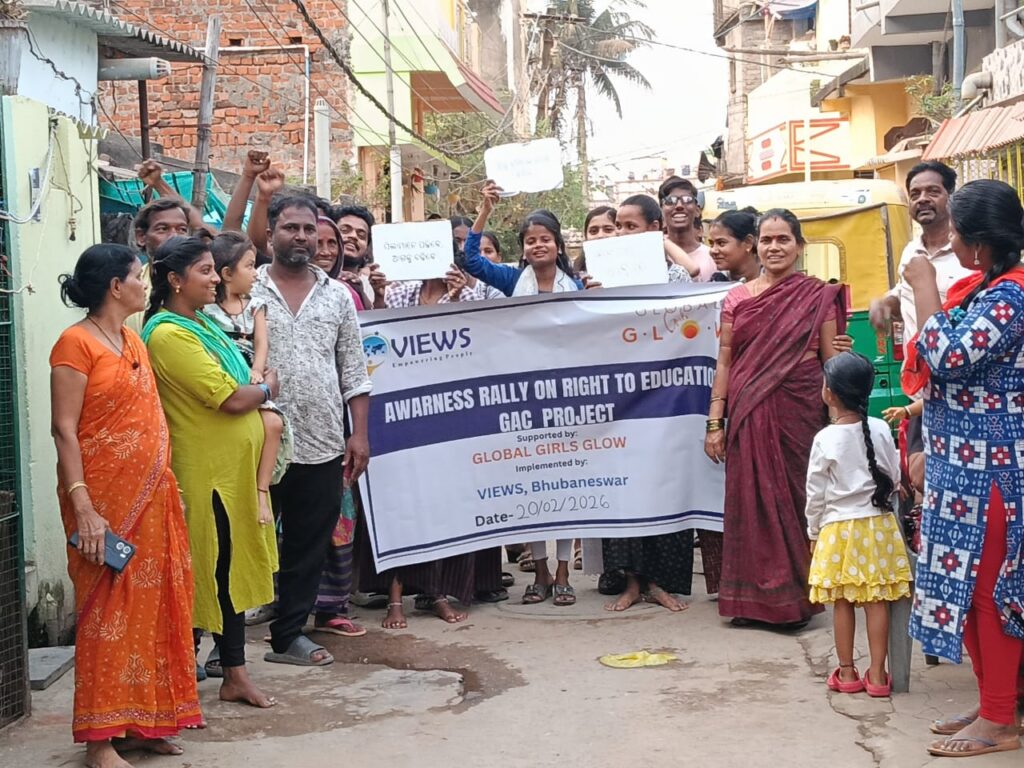
- In India, Swati surveyed 50 households to identify children who had left school and understand barriers to their return. By engaging parents, teachers, and community workers, she connected her findings with efforts to support readmission — ultimately bringing one girl back to the classroom after more than two years of absence. (In collaboration with our local implementing partner, VIEWS)
- In Nigeria, Christiana encountered difficulties securing school approval for her proposed work on sexual harassment. So she revised her approach to focus on protection and reporting mechanisms in the Internally Displaced Persons (IDP) camp where she lives. Through meetings with the camp chairman and outreach to girls, her experience shows why reflection and mentorship matter when an intended route to change proves difficult. (In collaboration with our local implementing partner, HAFAI)
These stories capture different stages of progress. Training can strengthen understanding and collective confidence. An approval can create access. A committee can establish responsibility. A written commitment can provide a basis for accountability.
Through our Dream. Plan. Do. Review. approach, girls learn to connect these steps and assess what their efforts are achieving.
Girl Advocacy at the United Nations
The same approach informs our engagement with the United Nations Commission on the Status of Women (CSW).
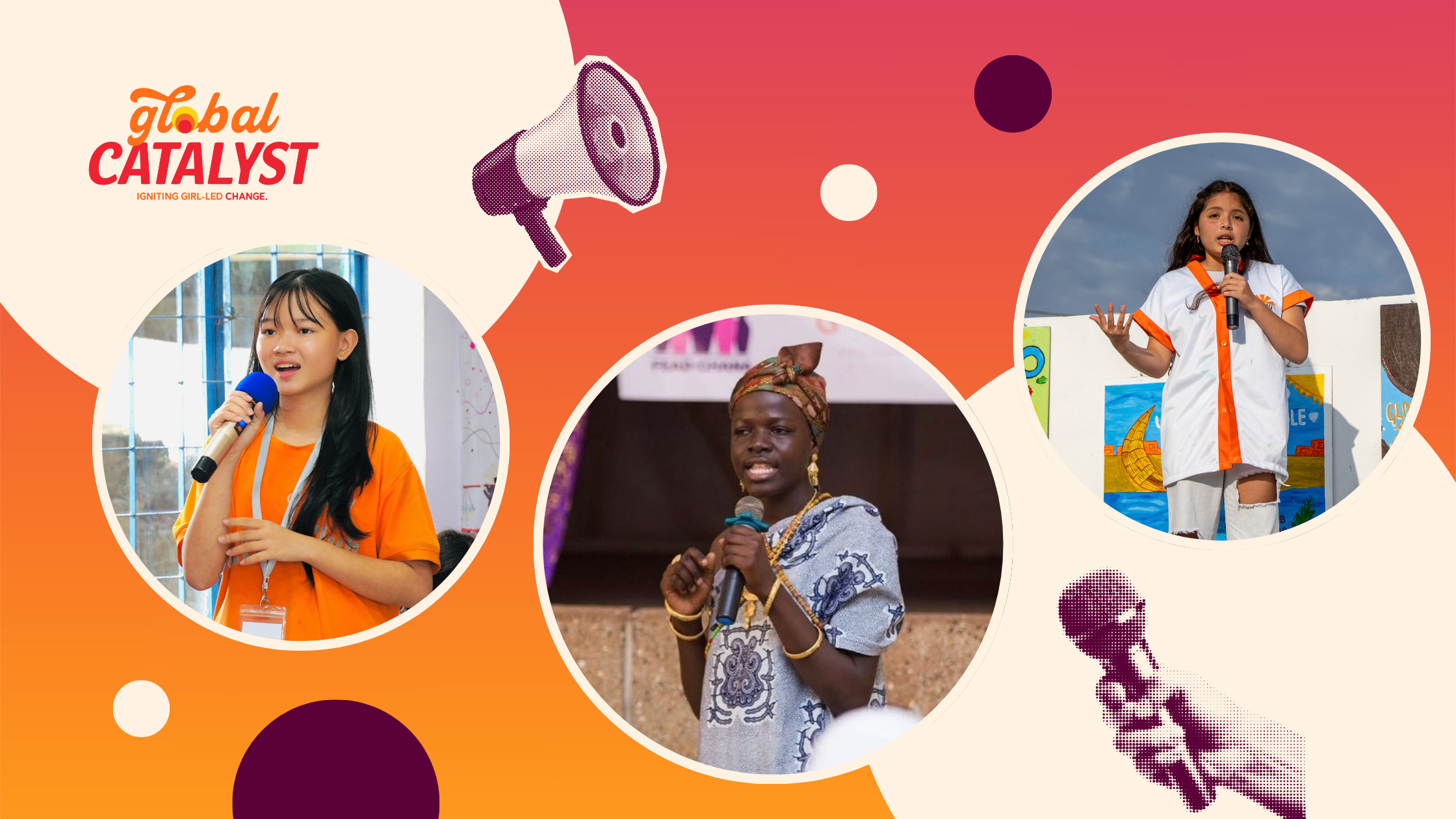
Supported by our special consultative status with the United Nations Economic and Social Council (ECOSOC), our advocacy initiatives create opportunities for girls’ experiences and recommendations to inform international discussions on gender equality. Each year, this allows us to host a virtual, girl-led parallel event as part of the CSW convenings.
At this year’s event — Girls’ Roadmaps to Justice — girls presented hand-drawn illustrations of the journeys girls in their communities face when seeking safety and support. They mapped out where a girl might turn in situations of abuse, harassment, child labor, or interrupted education; the barriers she could encounter; and what a more responsive justice system for girls should provide.
Practitioners working on gender equality, legal support, and girls’ programmes joined us to respond directly to girls’ analysis.
These roadmaps made complex systems visible through girls’ perspectives. They showed how stigma, fear of blame, and inaccessible support can affect whether a girl seeks help.
They also identified practical responses, including safer reporting routes, accessible assistance, and stronger institutional support.
Girls contributed as analysts and advocates, bringing knowledge that helped shape the discussion.
Our Vision for 2027 And Beyond
Our 2026–2027 strategy aims to make the connection between community experience and policy engagement more systematic.
We aim to create a Global Advocacy Cohort drawn from GAC alumni, with preparation in consultation facilitation, policy framing, and UN processes. With staff and regional support, these advocates will help gather perspectives from other girls, identify shared concerns, and develop recommendations that remain sensitive to differences across communities.
A shared Girls’ Evidence Note and thematic policy briefs are planned to bring these findings into discussions with decision-makers. CSW is the primary focus, alongside selective ECOSOC Youth Forum engagement. Concentrating on these opportunities allows time for careful preparation, sustained relationships, and follow-up on how recommendations are received and used. Review remains essential here, too: understanding what an engagement achieved and what should happen next.
We also want to bring girls’ priorities more firmly into public conversations about their rights. Building on their advocacy, we aim to contribute a clear, credible voice on issues such as education, safety, and access to justice, connecting what girls are experiencing with the changes they’re calling for. As this work develops, girls’ insights and recommendations will guide the positions we take and the action we encourage, extending the reach of their advocacy statements and inviting others to respond.
“We want to bring girls’ priorities more firmly into public conversations about their rights.”
Leadership also needs room to grow beyond a single cohort. Planned alumni pathways include peer mentorship and opportunities for continued engagement in advocacy, public speaking, and policy spaces. Alumni can bring practical experience to incoming GAC members: for example, how to approach a school leader, respond to a setback, or balance advocacy with education and other responsibilities. These continued opportunities can help alumni deepen their leadership while contributing their voices and experience to the wider movement.
Throughout this work, girls’ consent, safety, and choices guide meaningful participation. Language, disability access, digital connectivity, and school commitments affect who can take part and how. Local partners and mentors help respond to those realities, while girls retain control over the experiences they choose to share.
As our advocacy initiatives grow, our ambition is not simply to create more opportunities for girls to participate in, but to strengthen the pathways through which their advocacy can influence decisions over time. That means looking beyond whether girls were present in a meeting or spoke on a global platform. It means asking even harder questions:
- Did institutions respond?
- Were commitments followed through?
- Did girls’ evidence shape a decision, practice, or policy?
- Are girls gaining the relationships, confidence, knowledge, and collective power to continue advocating beyond a single project or program?
All of this matters — particularly at a time when hard-won gains for women and girls are facing growing backlash, and the spaces and systems through which they can exercise their rights and influence decisions remain under pressure.
Access to global platforms such as CSW remains important, but participation at the UN cannot be the end point of advocacy. Girls’ voices being heard in influential spaces has greater power when it is connected to girls organizing directly in their communities, evidence gathered from their everyday realities, local and national allies who can act on that evidence, and sustained follow-up after the meeting ends.
This is the promise of our Glo-W-cal approach: creating stronger pathways between local action and global influence, so that each can inform and reinforce the other.
Looking ahead, our vision is to build advocacy programs in which girls do not advocate alone, or only once. We envision stronger connections across countries and generations of girl advocates; alumni supporting those who follow them; girls identifying shared priorities while retaining the specificity of their own contexts; and partnerships that connect community action with national, regional, and global movements.
Over time, the goal is to develop not only individual girl leaders, but greater solidarity among girls and those standing alongside them — a network capable of learning together, speaking together when useful, acting in different places, and sustaining pressure for change.
That is where we want this work to lead: from a girl recognising that something in her world should be different, to finding others who recognise it too; from individual voice to collective advocacy; and from being invited into spaces of influence to helping shape what those spaces hear, understand, and, ultimately, do.
Girls’ leadership is not only something to amplify. It is something to connect, invest in, and sustain so that girls can build power together and carry their advocacy forward.
Want an inside look at girl-led change in action? Check out, In Côte d’Ivoire, This Girl’s Investment Is Helping Women Build Better Livelihoods.
Global Catalyst mentors girls around the world to become powerful advocates and confident leaders. Our signature program, GLOW Club, connects girls in some of the world’s most underserved areas with trusted local mentors and a safe space to express themselves as they develop their agency, find their voice, and build their power. Since our founding, we’ve ignited the power of more than 100,000 girls, sparking a growing movement of youth-led change that is transforming communities — and the world — for the better.